Life Path Number 5 for men and women: meaning, characteristics, compatibilityA Road Without Rails: A Path That Never Repeats Yesterday
Life path number 5 is a road built out of change. Again and again, life breaks apart whatever has settled before it can harden into a cage, and drops you onto a new stretch with no map. The first lesson of this Life Path Number is not to flee the change but to carry the experience out of it; the second is to finish what you start before the next turn beckons.
The essentials
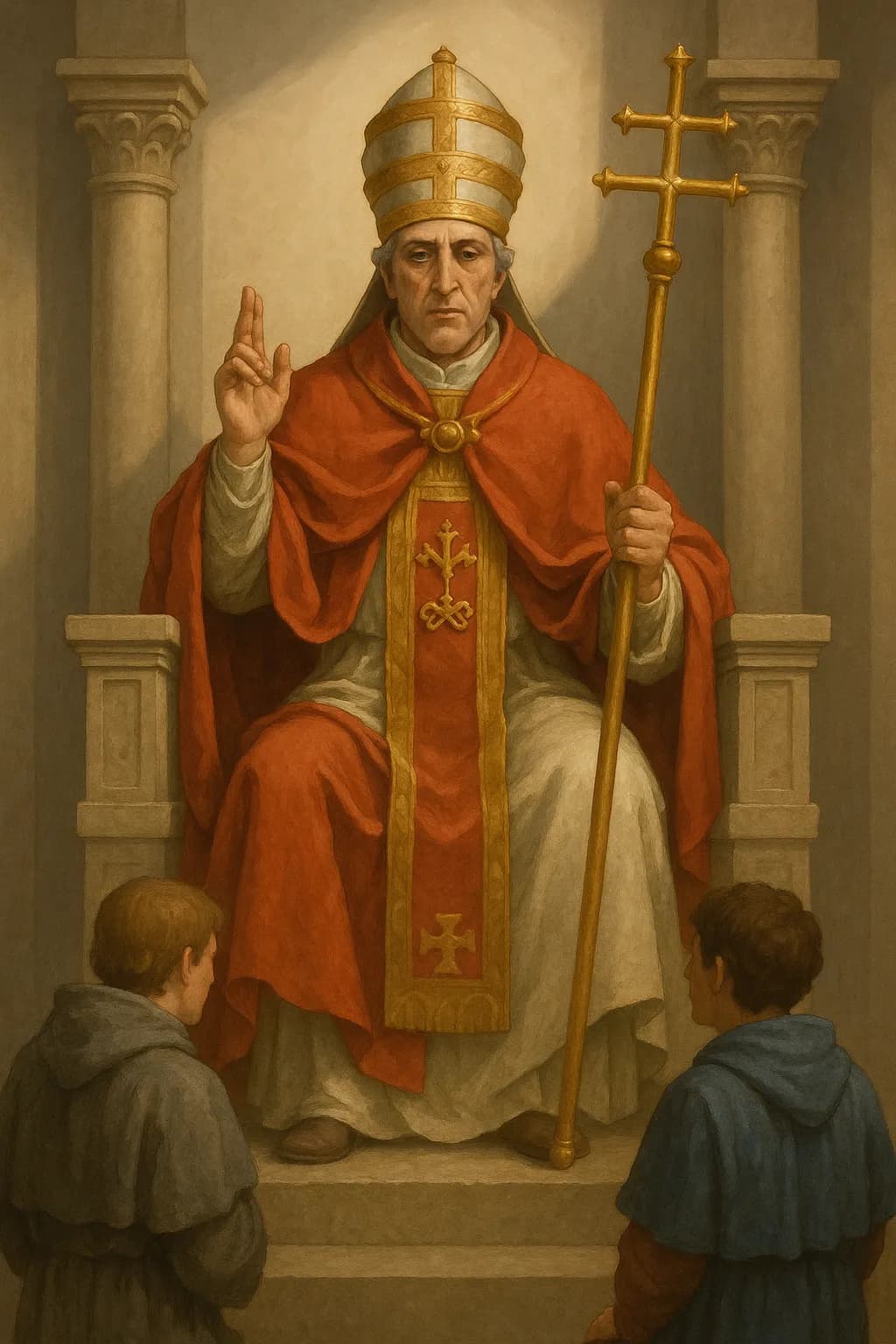 Tarot arcanaThe HierophantThe Hierophant stands where rules meet lived experience — the Five does the same, testing every rule against its own skin before accepting it or throwing it out.What The Hierophant reveals →
What it means
The central plot of this road repeats from childhood: the moment life settles, something tips it over. A move, a change of school, a parents' divorce, a sudden turn where others walk a straight line for years — stability rarely holds for long on a 5, and that isn't bad luck, it's how the route is built. The familiar starts to pinch like a shoe a size too small, and you yourself begin to loosen whatever has only just been arranged. This is not a malfunction of the path — it's its engine: a 5 is led toward where experience changes, not toward where it gets locked in place. The road of early childhood teaches you that nothing is fixed forever, and tomorrow rarely equals yesterday.
The path has recognizable stages. The first third is trying everything: jobs, cities, circles, and hobbies cycle through fast, and that's the route doing its work, not flakiness. The middle is the test of freedom — a trail of half-finished things builds up behind you, and the road starts handing you situations you can't budge without a real choice and a real commitment: a relationship, a venture, a debt you can't leap over. The lesson of this stretch is telling living change from flight — behind the first stands a finished experience, behind the second sits something unfinished that you walk away from the moment it gets dull.
The third recurring plot is the price of impulse. A 5 is pulled to decide on the move and grab whatever is bright right now, and the path keeps presenting the bill for the hasty turn: the thing dropped at its peak, the words said in heat, the money spent all at once. This isn't a reason to smother the impulse — it's training in the pause before the leap. The mature stretch of this road is about putting down roots without a cage: the experience you never gathered into one craft or one relationship stays, on this path, a scatter of bright but disconnected stories.
Strengths
- Speed on New Ground. Where others freeze in the face of change, you come alive: an unfamiliar city, a new role, plans falling through — that's your element. The road taught you from childhood to land on your feet, so a change of course doesn't knock you down, it switches you on.
- Experience Instead of One Rut. The path has run you through a dozen different fields, and each left a skill behind. At a fork you pull a solution from an area a narrow specialist would never think of — the breadth of the route works in your favor.
- Immunity to Stagnation. You feel a rut that has turned into a swamp earlier than most, and you leave before it swallows years. Where habit holds people in dead work, a 5 gets pushed onward.
- Ease on Sharp Turns. Losing a job, moving, the snapping of a routine — these aren't catastrophes to you, just a change of scenery. This path has reshuffled the ground under your feet so many times that you take the sudden in stride better than people for whom change is new.
- A Network Gathered on the Road. Every new stretch of the path — a city, a project, a scene — leaves you people that someone who lived life in one place could never have collected. When you hit a wall, what saves you isn't one boss but a scatter of contacts from a dozen roads traveled: the way out comes through someone an earlier change brought you.
- Hunger for Living Experience. What drives you forward isn't fear or duty but curiosity about what you haven't tried yet. This engine hauls you through the dull stretches and keeps the path from stalling in one place.
Challenges
- Dropped Halfway. A venture, a relationship, a course holds you exactly until the novelty wears off — then the next bright thing pulls, and a trail of unfinished work piles up behind you. It happens because on this path change itself feels like motion, and the finish line loses to the start. Finish at least one of every three things you begin: pick a project you'll complete before you let yourself start anything new, and name a deadline to someone who'll ask.
- Decisions on Impulse. A job, a move, a big purchase — you choose them in one evening, on a wave of excitement, and the bill for the hasty turn arrives later. The root is in how the road is built: the bright 'now' is louder than the sober 'later' for a 5, and a pause feels like losing the moment. Put a delay between the urge and the act — one night's rule for small things, a week for big ones; if you still want it after a week, that's a decision, not an impulse.
- Freedom as Escape. Any commitment — a contract, a relationship, a long project — starts reading as a cage, and you bail out under the banner 'I need my freedom.' The reason is that on this path unfreedom and stagnation once fused into one thing, and now any tie feels like a trap. Tell change from escape by a simple test: are you leaving a finished experience, or the first boredom and difficulty? In the second case you're running, not growing.
- Excess Instead of Experience. The hunger for new sensations tips into overload: more impressions, more spending, more substances, more connections at once — and the bright dulls, demanding still more. On this path the thirst for experience has no built-in brake, and quantity stands in for depth. Trade dose for novelty: instead of 'more of the same,' choose 'differently' — one unfamiliar experience in place of five of the usual sharp ones.
- An Endless Trial Stage. You're ten years into sampling fields and never settling anywhere — and the first third of the path just won't end. Trying everything is comfortable in itself, and without an appointed point the stage never closes. Set a boundary: pick one area from everything you've sampled and give it longer than you've ever lasted anywhere — not to settle forever, but to find out what lies past the threshold of boredom.
Is your number 5?
Enter your birth date — we'll calculate and check in a second.
In intimacy
Relationships on this path are one of its main classrooms: this is where the road teaches you to stay once the novelty has drained away. The plot repeats from partner to partner — the first months carry you on excitement, and as soon as routine replaces infatuation, the familiar starts to pinch, and that old 'too tight' rises inside. When tension builds in a couple, it's not from fights but from your pull toward the new: your partner reads it as cooling off or a search for someone else, while for you it's a hunger for the living, not for another person.
The lesson of this stretch is neither to lock yourself in 'for the sake of stability' nor to bolt at the first boredom, but to bring change inside the couple rather than out of it. A bond that holds shared motion — trips, plans, new things done together — while also honoring your right to air gets through this stretch most smoothly: that's when freedom and closeness stop pulling in opposite directions.
- Once a month, do something with your partner that the two of you have never tried — a new route, a class, a weekend trip: shared novelty quiets the urge to go looking for it elsewhere.
- When the old 'too tight' rises, say out loud 'I need to change the rhythm' instead of going silent and disappearing — the path teaches you to bring change into the couple, not to exit it for a gulp of freedom.
- If you're with a 5: don't hold her in with rules and control — the tighter the leash, the stronger the pull to bolt; give her air and invite her into shared adventures, and she'll come back on her own.
Where it comes alive
The career line on this path isn't a ladder in one tower but a route through different buildings. The plot is recognizable: you enter a field and, on the hunger for the new, blow past the beginner stage fast — because what pulls you is interest, not discipline; and that very same engine cuts you out once the field turns predictable, and you start suffocating and eyeing the next door. This isn't carelessness, it's the road at work: a 5 is held by novelty and variety, and a stream of identical days dims it faster than any fatigue. There's only one dead end on this path — getting stuck in a rut where the same Tuesday repeats for ten years.
The fork 'a stable spot or room to maneuver' will come up more than once, and the path's lessons side with mobility and varied tasks. A warm salary in a role where every day is a carbon copy isn't support for a 5 but a slow fading; changing projects, travel, direct contact with people, and variety matter more than status and seniority. When choosing a place, look not at the sign on the door but at how the week is built: do the tasks change and is there somewhere to move, or is Tuesday forever equal to Monday?
Where it gets hard: ledger accountant — the same cycle of entries month after month dims a 5 faster than any overtime · archivist — silence, stillness, and order with no novelty or people turn the workday into a cage · assembly-line operator — one repeated operation with no right to change the rhythm drains harder than heavy but varied work · checkpoint controller — a fixed post and a uniform flow with no change or maneuver give a 5 neither air nor new experience.
Which numbers it resonates with
Number 5 in their lives
Sold paintings, preached, and switched countries before he ever picked up a brush — his art was born out of a string of sharp turns.
Every film was a separate experiment with form; he never repeated what he'd found, but left to look for a new cinematic language.
From film roles to field missions and directing in conflict zones — a life lived as a change of roles and a breadth of experience.
Six decades on stage with no settling down: endless tours and constant motion turned out to be his natural habitat.
Worked a dozen jobs from ferryman to lawyer and taught himself in snatches — his rise came through wildly varied experience.
Shifts her image and genre from album to album, never letting the audience get used to a single version of her.
Life path numbers are calculated from the full date of birth.
What to try today
- Pick one thing you started and dropped, and finish it before you let yourself take on anything new; name a deadline to someone who'll ask.
- Before your next big purchase or job change, wait a week; if the wish is still there after a week, act — if it's fizzled out, it was an impulse.
- Take the field you've lasted in the longest, and hold on one month past the point where boredom usually makes you leave.
- This week, swap one of your usual sharp thrills for one new experience you've never tried — trade dose for novelty.
- Today, write down three things you're tempted to drop out of boredom, and close at least one final step on each.
Number 5 in other roles
Short and to the point
Add up all the digits of your full birth date and reduce the sum to a single digit. Example: 09/23/1980 → 0+9+2+3+1+9+8+0 = 32 → 3+2 = 5. If the last step gives 11, 22, or 33, you don't reduce it — those are master numbers, a separate case. It's the full date that counts — day, month, and year — which is why your Life Path Number is set once and for all and never changes.
On the 5's road, switching fields is how it's built, but there's a simple test. Look at what you carry away: if every venture left you experience and a skill, and you left it once it was done with, that's a normal transition to the next stretch. But if you bail exactly when the novelty fades and routine begins, and there's nothing to remember it by, that's flight from boredom, not movement. The fix isn't a change of character but one rule: finish at least one of every three things you start.
No. The path demands change and air, but change isn't only 'leaving' — it's also 'bringing the new inside.' Stability suffocates a 5 only when it turns into stillness: the same day on a loop, walls with no room to maneuver. A family with shared motion — trips, plans, new things together — and a job with changing tasks keep a 5 for years. The lesson of this path isn't to avoid commitments, but to find the kind that leave room inside them to keep changing.
They're calculated from different data and answer different questions. The Life Path Number comes from your full birth date and describes the road itself: the lessons, the stages, the recurring plots — what life leads you through. The Expression Number, also called the Destiny Number, is calculated from your name, and it's about the tools — your talents and the way you get things done. Different numbers mean you walk the road of change with your own set of instruments: the lessons stay a 5's — freedom, experience, learning to finish what you start — while the second number sets exactly what you live them with.
No, the calculation from your date doesn't get it wrong — but the Life Path Number describes the route, not the character: what life leads you through, not what you're like inside. Even a homebody gets pulled off course by this path again and again: moves, job changes, the snapping of the familiar come to a 5 more often than to others, even if you don't go looking for them. The lesson is the same — learn to draw experience out of forced change instead of waiting it out as bad luck; your character sets how easily that comes to you, not whether the path applies at all.
All your numbers — together
Your six core numbers from your date and name, and how they work together — in a personal reading with a numerologist.
What else unlocks Taroruna

Online spreads — an answer to your pressing question in minutes.

Today's forecast for your sign — a quick check-in with the sky.

Your personal birth chart — character, talents and destiny.

Moon phases and favorable days for important matters.